
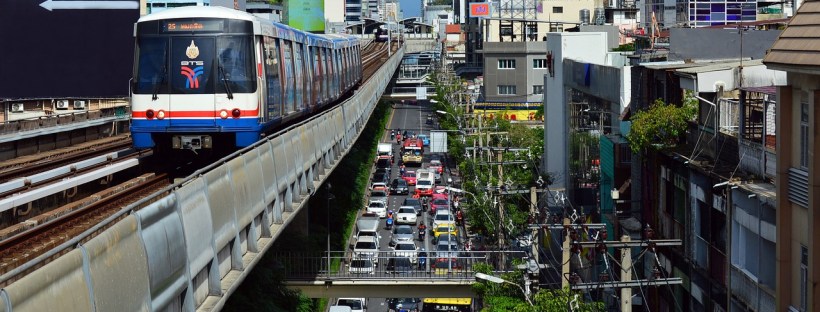
BTS Skytrain: The Lifeline of Bangkok
Bangkok, the bustling capital of Thailand, is known for its vibrant street life, cultural landmarks and, not to mention, its infamous traffic jams. In the midst of this urban jungle, the Bangkok Mass Transit System, commonly known as the BTS Skytrain, stands as a reliable and convenient means of transportation.
The BTS Skytrain, inaugurated on December 5, 1999, is an elevated rapid transit system in Bangkok. It was introduced to ease the city’s severe traffic congestion and improve the quality of life for its inhabitants by providing a faster transportation alternative.
One of the most common queries about the BTS Skytrain is “How expansive is the network?” The BTS Skytrain operates on two lines, the Sukhumvit Line running northwards and eastwards, and the Silom Line which serves the central and southern parts of the city. Together, they cover a significant portion of the city, with 43 stations spread over 48.7 kilometers.
The BTS Skytrain isn’t just a mode of transport, but also a window into Bangkok’s rich tapestry of life. As you ride along, you’ll witness a diverse blend of modern cityscapes, traditional markets, historic temples, and bustling shopping districts. It’s an ideal way for tourists to explore the city of Bangkok, offering direct access to attractions like the Chatuchak Weekend Market, Siam Paragon, and the riverside Grand Palace.
The BTS Skytrain also plays a pivotal role in Bangkok’s commitment to sustainable urban development. By reducing the reliance on road transport, it contributes to lower carbon emissions and promotes a cleaner and greener city.
So, the next time you find yourself in Bangkok, don’t just see the BTS Skytrain as a means to get from point A to B. Experience it as an integral part of the city’s fabric, a symbol of its constant evolution, and a testament to its harmonious blend of tradition and modernity.
 milwaukeediningguide.com